
Taro
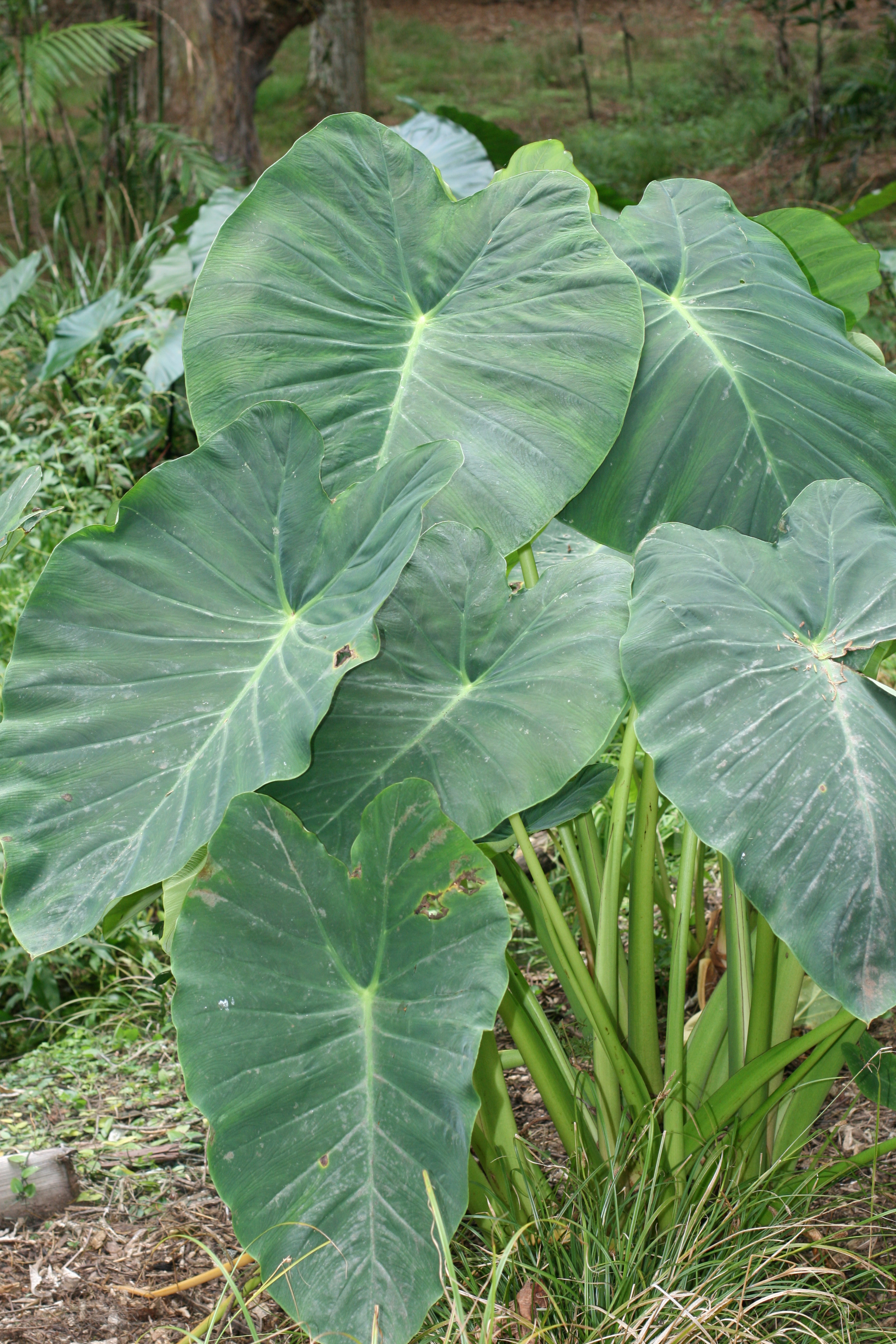
Taro is similar to the Irish potato (Solanum tuberosum) in many properties, and is sometimes called the "potato" of the humid tropics. In comparison with potato, taro corm has a higher proportion of protein (1.5-3.0%), calcium, and phosphorus; it has a trace of fat, and is rich in vitamins A and C. Moreover, taro is 98.8% digestible, because it has very small starch grains fairly rich in amylose (20-25%), which breaks down to sugar with human saliva. This type of carbohydrate is excellent for people with digestive problems, so that taro flour is used in infant formulae and canned baby foods and is good for people with allergies, such as lactose intolerance. Some dentists say that taro produces fewer dental problems than other starch crops. Recent research indicates that plastics can be made to be biodegradable by adding taro starch grains.
Taro corms are roasted, boiled, or baked, and may be made into cakes.
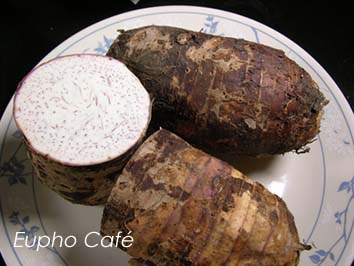
Heating is necessary to remove an acrid, irritating property of the raw corm. Traditionally, the substance blamed for this irritation has been the needle-like crystals of calcium oxalate, which occur throughout the plant and become lodged in the mucous membranes of the mouth and throat. Dumbcane (Dieffenbachia), a household plant, is considered a dangerous poison for the same reason. Now other researchers suspect that one or more additional chemicals may be responsible for the acridity and intense itching and burning of raw taro, which would be injected into mucous membranes by the sharp-tipped calcium oxalate crystals. Calcium oxalate is highly insoluble and contributes to kidney stones. The toxin is minimized by cooking, especially with a pinch of baking soda. It can also be reduced by steeping taro roots in cold water overnight.

In the Hawaiian Islands, taro plant is eaten after thoroughly boiled to destroy the toxins; the leaf (luau, also the name of the feast using taro leaves) must be boiled at least 45 minutes over low heat, whereas corms are boiled in a deep pot with salted water for at least an hour or until soft.
Cassava
Cassava is the third-largest source of carbohydrates for meals in the world.
The cassava root is long and tapered, with a firm homogeneous flesh encased in a detachable rind, about 1mm thick, rough and brown on the outside. A woody cordon runs along the root's axis. The flesh can be chalk-white or yellowish.

Cassava roots are very rich in starch, and contain significant amounts of calcium (50 mg/100g), phosphorus (40 mg/100g) and vitamin C (25 mg/100g). However, they are poor in protein and other nutrients. In contrast, cassava leaves are a good source of protein and rich in the amino acid lysine, though deficient in methionine and possibly tryptophan.
Around the world, cassava is a vital staple for about 500 million people. Cassava's starchy roots produce more food energy per unit of land than any other staple crop. Its leaves, commonly eaten as a vegetable in parts of Asia and Africa, provide vitamins and protein. Nutritionally, the cassava is comparable to potatoes, except that it has twice the fiber content and a higher level of potassium.

Cassava roots and leaves should not be consumed raw because they contain two cyanogenic glucosides, linamarin and lotaustralin. These are decomposed by linamarase, a naturally occurring enzyme in cassava, liberating hydrogen cyanide (HCN). Cassavas grown during drought are especially high in these toxins. A dose of 40 mg of pure cassava cyanogenic glucoside is sufficient to cause severe calcific pancreatitis in humans, leading to chronic pancreatitis. Chronic, low-level cyanide exposure is associated with the development of goiter and with tropical ataxic neuropathy, a nerve-damaging disorder that renders a person unsteady and uncoordinated. Severe cyanide poisoning, particularly during famines, is associated with outbreaks of a debilitating, irreversible paralytic disorder called Konzo and, in some cases, death. The incidence of Konzo and tropical ataxic neuropathy can be as high as 3 percent in some areas.
Yams

Yam provides around 110 calories per 100 grams of product. Yam is high in vitamins C and B6, potassium, manganese and dietary fiber while being low in saturated fat and sodium. A product that is high in potassium and low in sodium is likely to produce a good potassium-sodium balance in the human body, and so protects against osteoporosis and heart disease.
Yam products generally have a lower glycemic index than potato products, which means that they will provide a more sustained form of energy, and give better protection against obesity and diabetes.
It is also known to replenish fast-twitch fibers and West Indians use it as a way of recovering after sprinting
Yam is consumed in various ways, but is usually boiled and eaten. This involves cutting yam into pieces, then peeling the skin, and boiling the starchy "meat". This is usually consumed with palm oil (traditional way), or with other sauces. The boiled yam can also be pounded with a traditional mortar and pestle to create a thick starchy paste known as Pounded Yam Iyan, as well as Fufu. This is also eaten with traditional stews and sauces. Another method of consumption is to sun dry the raw yam pieces. When dry, the pieces turn a dark brown color. This is then milled to create a powder known as "elubo" in Nigeria. The brown powder can be prepared with boiling water to create a thick brown starchy paste known as "amala". This is also consumed with the local stews and sauces. The most common cooking method in Western and Central Africa is cooked "boiled" yam.

Yams of African species must be cooked to be safely eaten, because various natural substances in raw yams can cause illness if consumed. (Excessive skin contact with uncooked yam fluids can cause the skin to itch. If this occurs, a quick cold bath or application of red palm oil to the affected part of the body will stop the itching.)

This is a beautiful, hardworking African woman, against all odds......so is the one carrying the baby on her back, and the one peeling the cassavas with her 2 kids....and this is what they do.....hard work......
The Past is Our wisdom
The Present is Our Power
The Future is Our Purpose

Thomas
Thomas
KENYA

No comments:
Post a Comment